


The William Cook group has recently completed a major upgrade to its heavy steel foundry at Parkway in Sheffield. The plant specialises in the production of high-integrity steel castings for demanding sectors including nuclear, energy and naval where metallurgical consistency and process traceability are critical.
Increasing Melt Demand and Capacity Constraints
With a sustained increase in demand for larger casting weights, the limitations of the existing melt shop configuration became more pronounced. The plant previously operated three coreless induction furnaces rated at 6,000 kg, 3,000 kg, and 1,500 kg together with a 6 ton AOD unit, providing a combined batch capability of approximately 17,000 kg.
Although this arrangement offered operational flexibility, it imposed constraints on melt sequencing, particularly for larger pours requiring multiple heats, extended holding times, and tighter control of superheat and metallurgy.
A technical and operational review by the management team concluded that while sufficient incoming electrical power was available, the system would require additional transformer capacity to support a higher connected load and enable a meaningful increase in melt rate.
Furnace Upgrade Strategy
As part of the upgrade strategy, it was determined that the 1,500 kg furnace could be removed and replaced with a 4,500 kg unit. This delivered an immediate 3,000 kg uplift in single-melt capacity and improved alignment with the production requirements of larger castings.
The revised furnace configuration—6,000 / 4,500 / 3,000 kg—was selected to improve melt shop balance, reduce the number of heats per casting, streamline overall process flow from charge to pour and extend the melt capacity limit to 20 tonnes.
Equipment Supply and System Integration
In January 2025, the contract was awarded to Meltech Ltd. The scope included the supply and installation of a 1,500 kW Pulsar IGBT inverter, coupled with a single 4,500 kg Mag-Melt tilting furnace body.
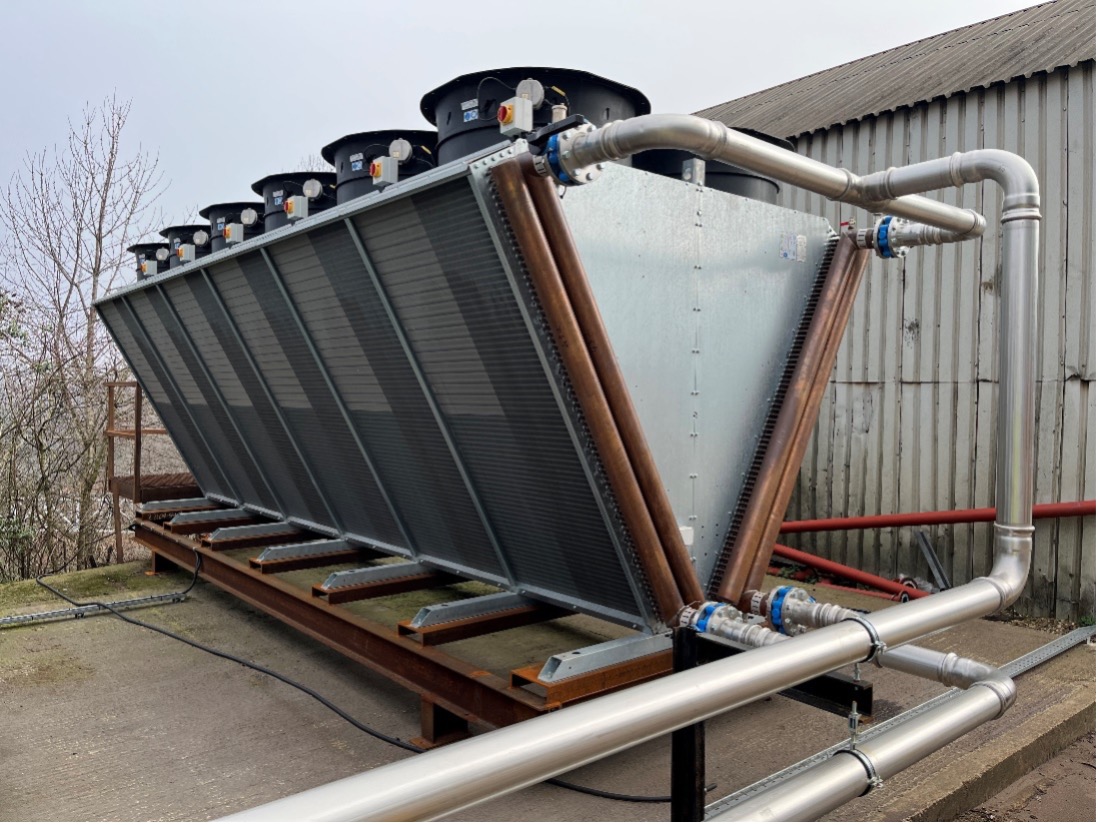
In addition, a new common water cooling system was installed, designed not only to support the new furnace but also to supply the existing 3,000 kg unit, improving overall system efficiency and simplifying maintenance.
The project also involved significant modification to the melt shop infrastructure. This included reconfiguration of the underfloor platform, installation of energy-efficient air-cooled busbars, and repositioning of the furnaces into the new 6,000 / 4,500 / 3,000 kg layout. The revised arrangement was designed to improve access, reduce electrical losses, and optimise melt logistics on the foundry floor.
Power Electronics and Furnace Control
From a technical perspective, the 4,500 kg furnace represents a standard melting platform within the manufacturer’s range, but incorporates enhanced control capability. The system is based on series-resonant IGBT inverter technology, widely regarded as the industry benchmark for medium-frequency induction melting due to its reliability, efficiency, and stable power delivery across varying load conditions.
The installation includes advanced instrumentation with digital sensors monitoring key parameters such as cooling water flow, pressure, and temperature. These are continuously integrated into the control system to ensure safe and stable operation.
Operator control is provided via a remote HMI desk offering full visualisation of system performance, including power input, frequency, and diagnostic status. All process parameters can be monitored, recorded, and adjusted in real time directly from the melt shop platform.
For additional flexibility, a secondary computer based control interface has been incorporated within the inverter control panel below deck, providing the same functionality as the remote desk, this control system links and controls all the slave PLC driving the auxiliary systems.
Connectivity and Data-Driven Operation
A key feature of the Pulsar system is its interconnectivity. The inverter can be accessed remotely via PC, laptop, or mobile device, enabling real-time monitoring as well as retrospective analysis of historical melt data.
This functionality supports process traceability and provides a valuable tool for diagnosing potential issues such as cooling inefficiencies, abnormal power consumption, or developing equipment faults before they impact production.
Installation, Civil Works, and Commissioning
By August 2025, all equipment had been delivered to site, with William Cook’s in-house engineering team undertaking the associated civil and mechanical works. This included platform extensions and new furnace foundations to accommodate the revised layout.
The availability of detailed engineering drawings from the supplier ensured accurate integration of the new equipment, allowing installation to proceed without major modification on site. Commissioning of the system was completed without issue, with the furnace achieving expected performance parameters from initial start-up.
Operational Feedback
Andrew Kirton Vaughan, Foundries Director at William Cook, commented on the project:
“At the outset, we had limited experience with Meltech, but following a detailed evaluation of their proposal and direct engagement with their engineers, we concluded that the technology offered a high level of performance, reliability, and operational flexibility.
Their approach throughout the project was collaborative and responsive to our specific requirements. The level of detail provided during the design phase ensured that installation proceeded exactly as planned. From initial concept through to commissioning, the process was seamless.”
Ongoing Development and Industry Context
Meltech Ltd has supplied numerous Pulsar IGBT systems across Europe, supporting both traditional foundries and a wider range of high-performance manufacturing sectors.
A notable feature of the platform is its evolving software-driven architecture. Because the inverter is controlled by an internal computer system, functionality can be enhanced through the application of updated software. This allows additional features and performance improvements to be deployed on both new and existing installations, extending equipment capability over time.